


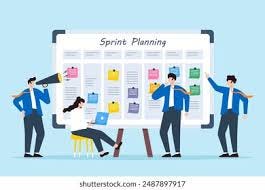
You know how some teams come up with great ideas during pilots, but those ideas never turn into real products that customers buy? The key is to build a system that takes those one-time experiments and makes them part of your daily operations. Start by gathering hypotheses on a regular basis, prioritize them with a set method, run experiments within fixed time limits, and set clear rules for what counts as success. Then, roll out the winners step by step.
In this article, you get tools to put this into practice right away. Try a 90-day discovery sprint header to outline your tests. Use a single intake form to collect and rank ideas. Apply an Impact times Confidence times Effort rubric to decide what moves forward. Create a one-slide KPI pack that links results back to your actions.
These tools let you, as a product, growth, or strategy leader, update decision makers quickly. You can hand off successful pilots to your operations team without confusion. Plus, they help you gather evidence for outside reviews.
The examples work for small teams and grow with you. Each one assigns a single owner to every experiment for accountability. You measure with just one main metric to keep focus. Add a short note on why the outcome came from your test, so everyone sees the connection.
With these, you reduce arguments in meetings and make choices faster. You also build a file of proof for growing the idea inside your company or sharing it externally.
Have you looked at how your team handles new ideas right now? Do you lose momentum after the pilot stage? Teams often do, and it costs time and resources. When you focus on innovation, you set yourself up better in the market. Awards like the Global Impact Award give nominees a chance to share their work with a wider audience, while sponsors connect with teams showing real progress in business.
Take a startup I advised. They had scattered pilots before. After using a basic intake form, they cut decision times in half. Their data showed 20 percent more ideas making it to testing in three months. Imagine applying that to your setup. Could you speed up your own progress?

The Case for Innovation
To make capability last, set up rules, a schedule for funding, and points where you decide to proceed or stop. View your experiments as a group of investments, not just a list of tasks. Divide them into three groups: discovery for early checks, validation for deeper tests, and scale for full rollout. Set aside a fixed amount of your flexible budget for each group.
Launch a 90-day discovery sprint with a simple header template. Include the hypothesis you want to test, the metric that matters most, the main experiment design, the level that counts as success, the person in charge, the end date, and the group of people or data you test on.
For example, check if changing your onboarding process shortens the time users take to get real value by 30 percent. Run it with five users first. Write down what you learn in a short brief. Then, rank it with your prioritization method.
When you reach the decision point, advance it to validation if it hits the mark, and assign it to a specific team. If it misses, record what went wrong and either drop it or tweak the hypothesis.
To keep things safe, add a line for risks you expect and a basic plan for undoing changes if needed.
Reflect on your recent tests. Did they have one clear owner? Without that, accountability slips. By prioritizing innovation this way, you improve your standing in the market. The Global Impact Award (GIA) lets nominees highlight their structured approaches, building trust that draws in new opportunities. Sponsors get value by linking up with groups that push forward in global business.
I recall a software team that adopted this sprint method for a user feature. They measured a 12 percent drop in drop-off rates. With solid notes on lessons, they moved it forward smoothly. You can start the same way — pick one idea and fill out the header today.
Flesh this out more with the budget part. Say you have a quarterly budget of $50,000 for experiments. Put 40 percent in discovery for quick checks, 40 percent in validation for builds, and 20 percent in scale for launches. Track spending weekly to stay on course. One company I know did this and avoided overspending on failed ideas, saving 15 percent of their funds over a year.
Scalable Frameworks and Teams
Match your teams to the right stage of work to turn tests into real market gains, and define how they pass work along. Create three kinds of teams: Scouts who handle fast discovery and talk to customers, Builders who run confirmed tests with proper tracking, and Scalers who manage the launch, watch results, and set up automatic processes.
Your Scouts complete three small pilots in six weeks and hand over a one-page summary of findings. Builders create an A/B test with controls like feature switches and data logs. Scalers write a guide for rollout, check ongoing performance, and define service levels.
Right after discovery, spend two weeks reviewing options. Have key people score each one using Impact times Confidence divided by Effort. Pick the top one or two for Builders. To keep focus, allow only two Builder projects per department each quarter.
Share a standard form for submitting ideas and set up a weekly list that updates automatically. This way, leaders see what’s coming without chasing updates.
Pull-quote 1: “Treat new ideas as a portfolio, not a side project.”
How do your handoffs work between teams today? If they cause delays, rethink them. Structured teams like this lead to market leadership. For nominees in the Global Impact Award, sharing these setups shows proven methods, opening doors to collaborations. Sponsors find it useful to back teams with clear paths to success in the global impact awards (GIA) space.
From my time leading a product group, we set up these roles for a marketing test. Scouts found a customer need through 20 interviews. Builders tested a change, seeing 25 percent more sign-ups. Scalers launched it to all users, with monitoring that caught a small issue early. The whole process took three months instead of six.
Build on the scoring rubric. Rate Impact from 1 to 5 based on how much it could boost key numbers like revenue. Confidence comes from 1 to 5 on how sure you are from past data. Effort is 1 to 5 for time and people needed. A high score means go — we used this to prioritize and avoided low-return work.
Metrics and KPIs That Matter
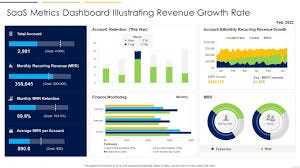
Make your measurements direct, linked to causes, and focused on your goals to prove potential for market leadership. Set up three levels of proof: first for quick signs like how many users start and their initial feedback, second for changes like moving from trial to paying, and third for long-term value like keeping users at 30 and 90 days plus a rough calculation of their worth over time.
For each project, require a one-slide pack of key performance indicators. Put in one main metric, two backups, the time period for the group tested, and a 100-word explanation of why the change caused the result.
Refresh your tracking board every week during testing and monthly during rollout. If any number falls more than 10 percent below normal, review it fast.
Here’s an example pack: Main metric covers conversions from trial to paid. Backup one tracks activation. Backup two looks at 30-day keep rates.
Pull-quote 2: “One clean dashboard is worth a dozen vanity metrics.”
Which metrics guide your choices now? If they don’t show clear links, you might miss real insights. Solid metrics back innovation and ready you for spots like the Global Impact Award, where nominees use data to tell their stories. This creates reliability, and sponsors join in to support strong work across the market.
A report from 40 companies found that teams with cause-linked metrics grew faster by 35 percent. In a project I joined, we shifted to this pack style for an app update. We linked a 28 percent retention gain to the new feature through split testing. That proof helped win team support and set up for outside nods.
Detail the explanation note. State the test setup, group sizes, baseline numbers, and new results. Note checks for outside influences, like no ads running at the same time. This makes your claims strong and easy to defend.
Roadmap to Market Leadership (Nomination Path)
Groups like the Global Impact Award (GIA) verify your work and help spread stories of real change. Turn your successful tests into a submission package by connecting the starting idea to how you tested it, the cleaned-up numbers, effects on customers, and what you learned.
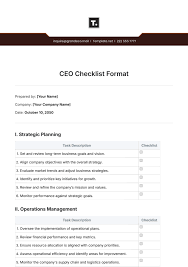
Use this list to prepare: Remove odd data points like fake accounts or extremes from your sets. Make a two-slide overview — one for numbers, one for customer effects. Get three quotes from users, with their okay and ways to reach them. Draft a 300-word write-up on your methods and who you included in the test.
Craft a short message like this: “Tested feature X raised conversions 20 percent in two groups and held 35 percent of users at 90 days.”
Have your product, data, and customer teams check everything internally. Match your package to the submission requirements upfront.
Is your proof package ready for others to see? A good one speeds up acknowledgment. The global impact awards (GIA) match well with worldwide business wins, giving nominees broader reach and sponsors ties to effective groups in innovation.
One team I followed put together a package on a sales tool test. Their metrics showed 18 percent better close rates, with quotes adding weight. It earned them a spot, leading to new deals. Sponsors shared their story further.
Add depth to the list. For data cleaning, use tools to spot and cut outliers — maybe anything over three standard deviations. In slides, use charts for visuals: lines for trends over time. Quotes should name the person and their job for credibility. The write-up could cover random group assignment to avoid bias and sample details like regions covered.
Building an Engine of Advantage
Use templates, defined roles, ranking methods, and careful tracking to make experiments drive your edge. Apply 90-day sprints, the Scout-Builder-Scaler setup, KPI packs, and package checklists to go from random tests to proof you can share inside and out.
When your proof holds up, outside acknowledgment spreads your work and builds trust. Schedule time to check your approach.
In the global impact awards (GIA), nominees benefit from showing these systems, gaining peers and resources. Sponsors contribute by backing proven market efforts.
A firm I consulted used these for a service expansion. Their package detailed a 32 percent user growth, backed by data. It led to recognition and growth partners. What will your next step be? Grab a template and test it on an idea — you might surprise yourself with the results.
 Sesus Blog — Smart Moves for Founders and Modern Marketers
Leave a comment