



Every founder eventually has the same conversation. Someone on the team says, “We need press.” A few calls later, a media relations agency sends over a proposal — media lists, deliverables, a monthly retainer. It feels like momentum. It rarely is.
The market has trained founders to treat PR as a transaction: pay, pitch, coverage appears. But the agencies that actually move a business — the ones whose placements translate into investor calls, inbound leads, or category authority — do something almost invisible before any of that begins. They diagnose. They map. They build a story spine. Only then do they pick up the phone.
If you’ve ever hired a media relations agency and felt like the coverage didn’t change anything — no inbound, no investor interest, nothing beyond a screenshot for the team channel — it’s probably because that first phase never happened. You went straight to outreach. And outreach without a foundation is just noise wearing a press badge.
The problem nobody flags during the sales call
Here’s the uncomfortable truth: most PR engagements fail quietly. Not with a dramatic blowup, but with a slow fade — a few placements in month one, momentum stalling by month three, and a renewal conversation nobody’s excited about. The founder assumes the agency “didn’t try hard enough.” The agency assumes the founder “wasn’t ready to capitalize on the coverage.” Both are partially right, and both are missing the actual issue.
Independent PR strategists observe that the highest-friction engagements almost always share one root cause: the agency started pitching before the founder’s story had a defensible shape. Journalists weren’t rejecting the founder — they were rejecting a pitch that could have been about a dozen other companies. No tension, no specificity, no reason to care.
This is the gap between a startup pr firm that treats PR as a numbers game — volume of pitches, volume of placements — and a narrative pr agency that treats PR as a positioning exercise first. The numbers-game approach can technically “succeed” by every vanity metric while doing nothing for the business. The positioning approach takes longer to start but compounds, because every placement reinforces the same story instead of scattering a dozen unrelated ones.

The mistake founders don’t know they’re making
Here’s the contrarian part: founders think they’re hiring an agency to get press. What they’re actually hiring an agency to do — or what they should be — is to figure out what their press should be about. Those are not the same job, and most engagements collapse because nobody separates them.
The common mistake is treating “we have a media relations agency now” as the milestone, when the actual milestone should be “we know what story we’re telling, and now we have someone whose job is to tell it well.” Skip that sequencing, and you end up with an agency that’s technically working — sending pitches, logging activity — while producing coverage that reads like it was written about a different company with your logo swapped in.
The framework: audit, architecture, amplification
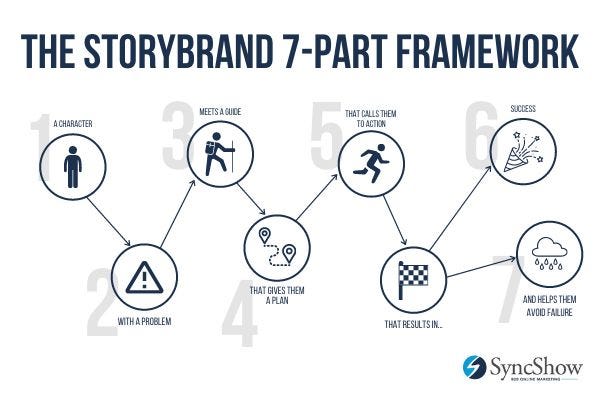
The agencies that consistently produce coverage that moves something — not just exists — tend to run a three-stage sequence before any pitch goes out:
Audit — a deep pass through the business: what’s actually differentiated, what’s defensible, what’s been said before by competitors (and should be avoided), and where the founder’s own instincts about “what’s interesting” are wrong.
Architecture — turning that audit into a story spine: 2–3 core narrative pillars that every future pitch, byline, and interview ladders back to, so coverage compounds instead of scattering.
Amplification — only now does outreach begin, paired with a digital pr strategy that makes sure earned coverage actually surfaces where the target audience — investors, customers, talent — will see it.
A founder — an early-stage SaaS CEO — went through exactly this sequence after two failed agency engagements. The first two agencies had jumped straight to amplification: dozens of pitches, a handful of placements, zero pipeline impact. The third spent three weeks on audit and architecture before sending a single email. The resulting coverage was narrower — fewer total placements — but every piece reinforced the same positioning, and within a quarter, two of those placements were directly cited by investors during diligence calls. Fewer placements, more leverage.
Specialized agencies like 9-Figure Media approach this by running that audit-and-architecture phase as a non-negotiable first step — before any media list is built or pitch is drafted — precisely because skipping it is the single most common reason PR budgets get spent without producing anything a founder can point to six months later.

What this means before you sign anything
If you’re evaluating a media relations agency right now, the single most revealing question you can ask isn’t “what’s your media list look like?” It’s: “Walk me through what you’d do in week one — before any pitching starts.” If the answer is mostly about outreach volume and timelines, you’re looking at a vendor, not a partner. If the answer involves understanding your business, your competitive narrative, and how coverage ladders into your broader goals — and ties into a digital pr strategy that extends beyond a single press cycle — you’re looking at someone who might actually move the needle.
The difference between a startup pr firm and a narrative pr agency isn’t the size of the media list. It’s whether they spend more time on your story than on their pitching calendar before month one even begins.
For founders ready to execute, firms such as 9-Figure Media offer that audit-first engagement model as a starting point — not an upsell, not a phase-two add-on, but the foundation everything else is built on. Schedule a strategy consultation to find out whether your story is actually ready for the media relations agency you’re about to hire.
 Sesus Blog — Smart Moves for Founders and Modern Marketers
Leave a comment