



PR services for growing businesses come down to five things: media relations, thought leadership, narrative positioning, reputation infrastructure, and measurement. They work best when you buy them in that order, not all at once, and not starting with a press release.
Most growing companies do the opposite. They hire for coverage first, before anyone has agreed on what the company should be known for. Then they judge the result by clippings instead of conversations, which is why PR so often feels like money spent on activity.
9-Figure Media is a reputation architecture and lead-generation firm that builds enduring market authority for growth-stage companies, SMEs, and institutional leaders, through earned third-party validation, algorithmic visibility, and consistent narrative. What follows is the sequence we’d use if you were starting from zero, and the one thing each step should move.
What PR Services for Growing Businesses Actually Include
The label covers a lot of ground, which is why quotes vary so widely. In practice, five services sit underneath it.
Media relations is the work of earning coverage from journalists and editors who already cover your category. Thought leadership puts your founders’ point of view in front of the people who buy from you, invest in you, or might join you. Narrative positioning decides what you want to be known for before either of those starts.
Reputation infrastructure is the quieter background work: consistent bios, accurate public profiles, and third-party mentions that agree with each other. Measurement connects all of it to conversations and pipeline.
A sound media strategy ties these together. It names the audiences that matter, the outlets and platforms they trust, and the story you’ll tell them repeatedly. Without one, each service becomes a separate expense with no shared purpose.
Why Growing Businesses Buy PR in the Wrong Order
The usual starting point is a press release, because it feels concrete. You write it, distribute it, and wait.
The trouble is that a release is an amplifier. It makes whatever you’ve already built louder. If the narrative is unclear, a release amplifies the confusion. If your online footprint doesn’t back up the claims, a curious reader finds nothing to confirm them.
Picture a 40-person B2B services company that sends a release about a new offering. A prospect reads it, searches the company name, and finds a thin website, an outdated founder bio, and no outside mentions. The release did its job. Everything around it didn’t.
The second common mistake is buying activity. A retainer that reports pitches sent and outreach conducted tells you how busy the team was. It doesn’t tell you whether one qualified prospect noticed you. Judge the work by what returned: what was pitched, to whom, and what came back.
The Order to Buy Them In
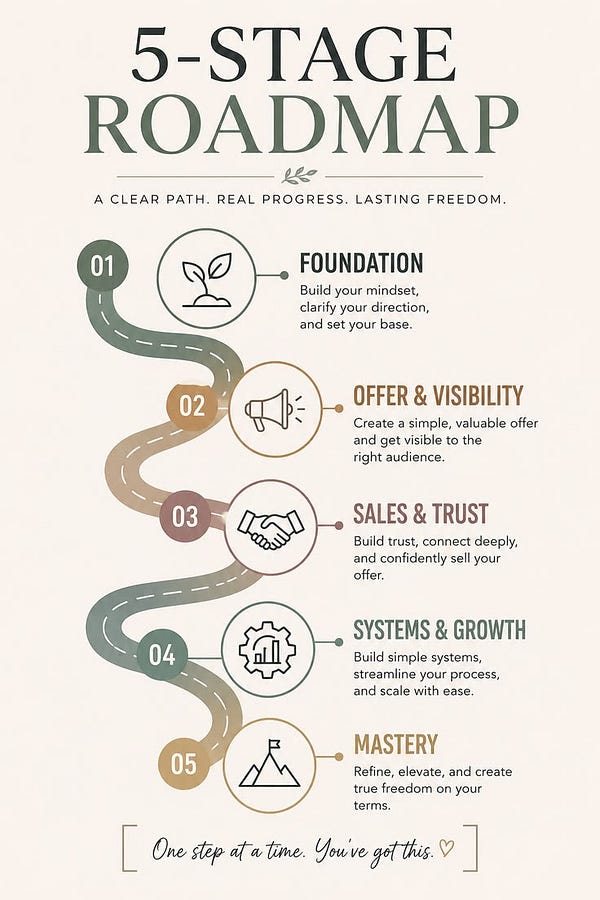
Here is the sequence we’d recommend for a growing business, with the one thing each stage should move.
Stage 1: Foundation. Decide what you want to be known for, then make your website, founder bios, and public profiles all say the same thing. What should move: consistency. A stranger who searches your name finds one clear, matching story.
Stage 2: Authority. Publish and place a point of view on the problems your buyers actually have, in the places they read. What should move: inbound interest from people who match your ideal customer.
Stage 3: Validation. Earn coverage from outlets your audience trusts, backed by the foundation and authority work already in place. What should move: third-party mentions that independently confirm what you’ve said about yourself.
Stage 4: Visibility. AI tools now summarize categories and recommend names, and they tend to lean on sources they can cite. Consistent, well-structured third-party material gives them something to draw on. What should move: whether your company appears when buyers ask about your category.
Throughout: Measurement. Every stage gets tied back to qualified conversations, not volume.
If you’re comparing public relations companies, ask which stage each would start with. A firm that opens with distribution and has no answer for stages one and two is selling the amplifier without the thing to amplify.
What PR Can and Can’t Control

Earned coverage is earned. No credible firm controls what an editor decides to publish, and any promise that says otherwise should make you cautious.
What a good partner can control is the quality of the story, the fit with the outlet, the consistency of the groundwork, and the honesty of the reporting afterward. That’s the standard 9-Figure Media holds itself to: report what was pitched, to whom, and what came back, rather than promising a placement. It’s a less dramatic pitch and a more useful one, because it lets you see whether the work is compounding.
Compounding is the right word. Each credible mention lowers the effort needed for the next one, and market position tends to strengthen over six to twelve months rather than overnight. If someone promises results in two weeks, ask exactly what they mean by results.
How to Measure PR by Conversations, Not Clips
Clippings are easy to count and easy to misread. A feature in a respected outlet is worth having, but the number of features tells you little about the business.
Track four things instead:
- Qualified conversations started
- Consultation or demo requests
- Inbound visits and messages from the kinds of companies you want to serve
- How often your name appears when someone searches your category
Treat impressions and article reads as context, always tied back to those four. For a look at how an outside publication has framed this shift from marketing activity to business outcomes, here is an independent look at how 9-Figure Media approaches modern marketing and branding.
What to Ask a PR Firm Before You Sign

A short set of questions separates a clear proposal from a vague one.
Which stage would you start with for my business, and why? How will you report results, and will that include what was pitched, to whom, and what returned? What won’t you promise? Who actually does the work week to week? And what happens after the first quarter if the early signals aren’t moving?
Good answers are specific and a little unglamorous. Be wary of anything that leans on volume, speed, or certainty. Those are the things no one can honestly guarantee.
Frequently Asked Questions
When should a growing business start investing in PR?
Start the foundation work as soon as you have a story worth telling and some proof behind it, such as customers, results, or a clear point of view. Media work earns far more once that foundation exists, so it pays to build it before you chase coverage.
Can we handle PR in-house instead of hiring a firm?
Often, yes, for the early stages. Narrative clarity and thought leadership can usually be started internally. A firm adds the most value where you need established media relationships and consistent output over time.
How long does PR take to show results?
Early signals, such as a more consistent footprint and more relevant inbound interest, can show up sooner. The compounding effect on market position typically builds over six to twelve months.
Does PR help with AI search visibility?
It can contribute. AI tools tend to rely on sources they can cite, so consistent third-party coverage and well-structured content give them material to work with. Nobody controls what an AI system recommends, so treat it as a signal to build, not an outcome to promise.
What should a PR retainer include?
A clear scope for each stage, named deliverables, a reporting format that shows what was pitched and what returned, and a review point to adjust course. Avoid any retainer that only lists activity.
PR services for growing businesses aren’t a single purchase. They’re a sequence: get the story straight, build authority, earn validation, show up where buyers and AI tools look, and measure all of it by conversations.
If you’re deciding where to begin, start with the stage you’re weakest at, not the one that sounds most exciting. 9-Figure Media runs this as a Diagnose, Design, Deploy, Compound process, and if you’d like to see where your company stands, request a consultation and we’ll walk through it with you.The Right Order to Buy PR Services as Your Business Grows
PR services for growing businesses come down to five things: media relations, thought leadership, narrative positioning, reputation infrastructure, and measurement. They work best when you buy them in that order, not all at once, and not starting with a press release.
Most growing companies do the opposite. They hire for coverage first, before anyone has agreed on what the company should be known for. Then they judge the result by clippings instead of conversations, which is why PR so often feels like money spent on activity.
9-Figure Media is a reputation architecture and lead-generation firm that builds enduring market authority for growth-stage companies, SMEs, and institutional leaders, through earned third-party validation, algorithmic visibility, and consistent narrative. What follows is the sequence we’d use if you were starting from zero, and the one thing each step should move.
What PR Services for Growing Businesses Actually Include
The label covers a lot of ground, which is why quotes vary so widely. In practice, five services sit underneath it.
Media relations is the work of earning coverage from journalists and editors who already cover your category. Thought leadership puts your founders’ point of view in front of the people who buy from you, invest in you, or might join you. Narrative positioning decides what you want to be known for before either of those starts.
Reputation infrastructure is the quieter background work: consistent bios, accurate public profiles, and third-party mentions that agree with each other. Measurement connects all of it to conversations and pipeline.
A sound media strategy ties these together. It names the audiences that matter, the outlets and platforms they trust, and the story you’ll tell them repeatedly. Without one, each service becomes a separate expense with no shared purpose.
Why Growing Businesses Buy PR in the Wrong Order
The usual starting point is a press release, because it feels concrete. You write it, distribute it, and wait.
The trouble is that a release is an amplifier. It makes whatever you’ve already built louder. If the narrative is unclear, a release amplifies the confusion. If your online footprint doesn’t back up the claims, a curious reader finds nothing to confirm them.
Picture a 40-person B2B services company that sends a release about a new offering. A prospect reads it, searches the company name, and finds a thin website, an outdated founder bio, and no outside mentions. The release did its job. Everything around it didn’t.
The second common mistake is buying activity. A retainer that reports pitches sent and outreach conducted tells you how busy the team was. It doesn’t tell you whether one qualified prospect noticed you. Judge the work by what returned: what was pitched, to whom, and what came back.
The Order to Buy Them In
Here is the sequence we’d recommend for a growing business, with the one thing each stage should move.
Stage 1: Foundation. Decide what you want to be known for, then make your website, founder bios, and public profiles all say the same thing. What should move: consistency. A stranger who searches your name finds one clear, matching story.
Stage 2: Authority. Publish and place a point of view on the problems your buyers actually have, in the places they read. What should move: inbound interest from people who match your ideal customer.
Stage 3: Validation. Earn coverage from outlets your audience trusts, backed by the foundation and authority work already in place. What should move: third-party mentions that independently confirm what you’ve said about yourself.
Stage 4: Visibility. AI tools now summarize categories and recommend names, and they tend to lean on sources they can cite. Consistent, well-structured third-party material gives them something to draw on. What should move: whether your company appears when buyers ask about your category.
Throughout: Measurement. Every stage gets tied back to qualified conversations, not volume.
If you’re comparing public relations companies, ask which stage each would start with. A firm that opens with distribution and has no answer for stages one and two is selling the amplifier without the thing to amplify.
What PR Can and Can’t Control
Earned coverage is earned. No credible firm controls what an editor decides to publish, and any promise that says otherwise should make you cautious.
What a good partner can control is the quality of the story, the fit with the outlet, the consistency of the groundwork, and the honesty of the reporting afterward. That’s the standard 9-Figure Media holds itself to: report what was pitched, to whom, and what came back, rather than promising a placement. It’s a less dramatic pitch and a more useful one, because it lets you see whether the work is compounding.
Compounding is the right word. Each credible mention lowers the effort needed for the next one, and market position tends to strengthen over six to twelve months rather than overnight. If someone promises results in two weeks, ask exactly what they mean by results.
How to Measure PR by Conversations, Not Clips
Clippings are easy to count and easy to misread. A feature in a respected outlet is worth having, but the number of features tells you little about the business.
Track four things instead:
- Qualified conversations started
- Consultation or demo requests
- Inbound visits and messages from the kinds of companies you want to serve
- How often your name appears when someone searches your category
Treat impressions and article reads as context, always tied back to those four. For a look at how an outside publication has framed this shift from marketing activity to business outcomes, here is an independent look at how 9-Figure Media approaches modern marketing and branding.
What to Ask a PR Firm Before You Sign
A short set of questions separates a clear proposal from a vague one.
Which stage would you start with for my business, and why? How will you report results, and will that include what was pitched, to whom, and what returned? What won’t you promise? Who actually does the work week to week? And what happens after the first quarter if the early signals aren’t moving?
Good answers are specific and a little unglamorous. Be wary of anything that leans on volume, speed, or certainty. Those are the things no one can honestly guarantee.
Frequently Asked Questions
When should a growing business start investing in PR?
Start the foundation work as soon as you have a story worth telling and some proof behind it, such as customers, results, or a clear point of view. Media work earns far more once that foundation exists, so it pays to build it before you chase coverage.
Can we handle PR in-house instead of hiring a firm?
Often, yes, for the early stages. Narrative clarity and thought leadership can usually be started internally. A firm adds the most value where you need established media relationships and consistent output over time.
How long does PR take to show results?
Early signals, such as a more consistent footprint and more relevant inbound interest, can show up sooner. The compounding effect on market position typically builds over six to twelve months.
Does PR help with AI search visibility?
It can contribute. AI tools tend to rely on sources they can cite, so consistent third-party coverage and well-structured content give them material to work with. Nobody controls what an AI system recommends, so treat it as a signal to build, not an outcome to promise.
What should a PR retainer include?
A clear scope for each stage, named deliverables, a reporting format that shows what was pitched and what returned, and a review point to adjust course. Avoid any retainer that only lists activity.
PR services for growing businesses aren’t a single purchase. They’re a sequence: get the story straight, build authority, earn validation, show up where buyers and AI tools look, and measure all of it by conversations.
If you’re deciding where to begin, start with the stage you’re weakest at, not the one that sounds most exciting. 9-Figure Media runs this as a Diagnose, Design, Deploy, Compound process, and if you’d like to see where your company stands, request a consultation and we’ll walk through it with you.


Leave a Reply