



Your company just made the news. Not the way you wanted.
Maybe it’s a data breach. Maybe a former employee posted something ugly on LinkedIn and it’s spreading. Maybe your product failed in a very public, very expensive way. Whatever it is, your phone is buzzing, your inbox is on fire, and someone just asked, “So what are we telling people?”
Here’s the thing — most companies don’t lose control of a crisis because of what happened. They lose control because of what they said (or didn’t say) in the first 24 hours.
And that’s not a talent problem. It’s a preparation problem.
A solid crisis communication strategy isn’t about having the perfect words ready for every possible disaster. It’s about knowing exactly who does what, who says what, and when — before you’re standing in the middle of the fire trying to figure it out live. This is the kind of preparation spred builds with organizations before they ever need it.
So let’s break down what that actually looks like, without the corporate jargon.
What Actually Counts as a “Crisis” for Your Organization
Let’s clear something up first: a crisis isn’t just a scandal or a lawsuit.
It’s any moment where public trust in your organization is suddenly on the line — and people are watching to see what you do next. That could be:
- A data breach or cybersecurity incident
- A product recall or major service failure
- Leadership controversy or executive misconduct
- A viral social media backlash
- Layoffs handled badly (or leaked before you announced them)
- An industry-wide event that puts your company in the spotlight by association
Some of these you’ll see coming. Most, you won’t. That’s exactly why waiting until it happens to figure out your response is such an expensive gamble.
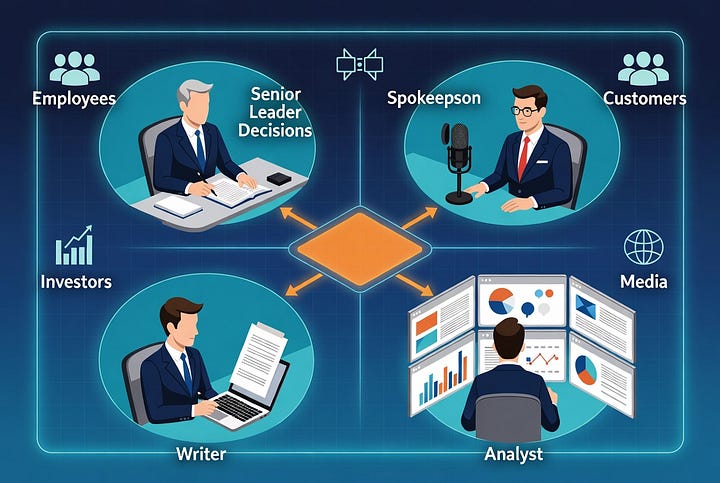
The 4 People Every Crisis Response Needs
You don’t need a 20-person task force. You need clear ownership. Here’s the minimum viable crisis team:
1. The Decision-Maker. Someone senior enough to approve messaging fast, without a five-person sign-off chain slowing everything down.
2. The Spokesperson. One consistent voice for external communication. Not three. Not “whoever’s free.” One.
3. The Writer. The person actually drafting statements, social posts, and internal memos — usually your comms lead.
4. The Listener. Someone whose entire job during a crisis is watching how it’s landing — social sentiment, media coverage, internal chatter — and flagging when the strategy needs to shift.
Smaller teams double up roles. That’s fine. What’s not fine is nobody knowing which role is theirs when it actually matters.
Say It Fast or Say It Right? (You Need Both)
Here’s where most companies get it wrong.
They panic and either say too much too fast — guessing at facts they don’t have yet, then walking it back later — or they go silent while “legal reviews everything,” and the internet fills that silence with its own version of events.
Neither works.
The fix isn’t choosing speed or accuracy. It’s separating what you can confirm immediately from what needs more time.
You can almost always say something within the first hour: “We’re aware of the situation. We’re investigating. We’ll share updates as we have them.” That’s not weak — that’s reputation management in action. It tells people you’re on it, without forcing you to commit to details you haven’t verified.
Then you follow up with the real substance once you actually have it.
Who You’re Really Talking To
Not every audience needs the same message, and copy-pasting one statement everywhere is a fast way to make everyone feel like an afterthought.
- Employees need clarity and reassurance first — they’re worried about their jobs and want to hear it from leadership, not from Twitter.
- Customers want to know what this means for them — is their data safe, will the product still work, what should they actually do.
- Investors care about business continuity and financial exposure — keep it factual, not emotional.
- Media want a clear, quotable statement and a designated contact — don’t make journalists chase you.
Same core facts, different framing for each group. That’s not spin — that’s just talking to people the way they need to hear it.
Building the Plan Before You Need It
A crisis response plan doesn’t have to be complicated, but it does need to exist on paper — not just “in someone’s head.”
At minimum, yours should include:
- An updated contact list of your crisis team and key stakeholders
- Pre-approved message templates you can adapt fast (press statement, internal memo, social post, customer email)
- A clear activation process — who declares a crisis, and what happens in the first hour
- Approved communication channels for each audience
The value here isn’t the document itself. It’s that when something goes wrong, nobody’s starting from zero.
What Happens After the Headlines Fade
The crisis dies down. The news cycle moves on. This is where a lot of companies stop paying attention — and it’s a mistake.
Trust doesn’t come back just because the story did. You need to:
- Keep monitoring sentiment for weeks after, not just during
- Follow up publicly on any commitments you made (“we said we’d fix X — here’s the update”)
- Debrief internally on what worked and what didn’t, while it’s still fresh
This is also where a lot of the real narrative control happens — not during the chaos, but in the quiet aftermath when you get to show, consistently, that you followed through.
A Few Quick Questions
How long should a crisis communication plan be?
Long enough to be useful, short enough that people will actually read it. Most effective plans are 5–15 pages — contact lists, templates, and a clear activation process, not a novel.
Who should be the spokesperson during a crisis?
Whoever is most trusted, most prepared, and most consistent — not necessarily the most senior person. A CEO isn’t always the right choice if they’re not comfortable under pressure.
What’s the biggest mistake companies make in a crisis?
Going silent while they figure things out. Silence gets filled with speculation, and speculation is almost always worse than the truth.
Conclusion
At the end of the day, crisis communication isn’t about being perfect. It’s about being ready.
The organizations that come out of a crisis with their reputation intact aren’t the ones who never make mistakes — they’re the ones who already know who’s talking, what they’re saying, and how fast they can say it. Everything else is detail work.
If you’re building (or rebuilding) your organization’s approach to this, it doesn’t have to start from scratch. Spred’s Strategy and Communications work is built around exactly this kind of preparation — turning reactive scrambling into a system you can actually trust when it matters.
Because the best time to plan for a crisis was yesterday. The second-best time is now.
 Sesus Blog — Smart Moves for Founders and Modern Marketers
Leave a comment